
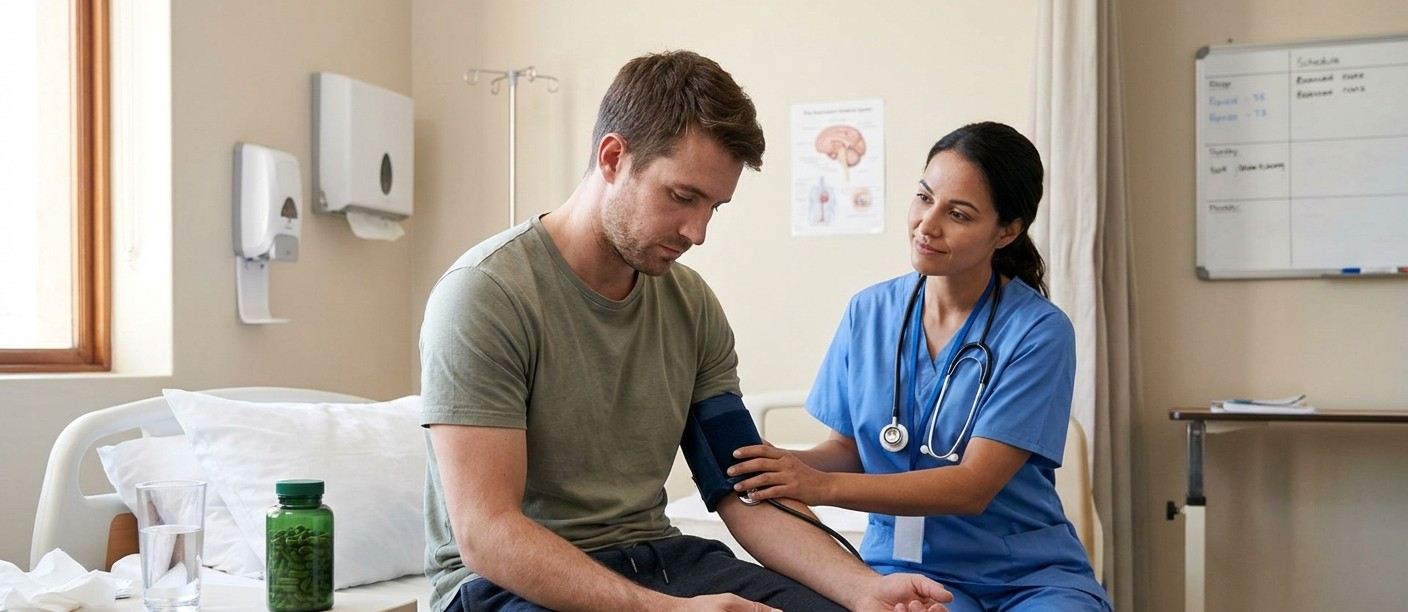
High-dose kratom use, especially daily use of concentrated extracts or 7-OH tablets, often calls for medically supervised detox because withdrawal from these products tends to be harder, longer and less predictable. Kratom detox in Dickson, TN starts with a clinical assessment that shows whether supervised outpatient care fits or whether a hospital or inpatient setting is the safer choice. That assessment considers the product, how often it is taken, other substances, and current health. Every case is individual, so a clinician weighs the product, the pattern, and other risks before choosing a plan.
What Counts as High-Dose Kratom Use?
Clinicians look at your usage pattern, the type of product, and how your body responds to each dose to define high-dose kratom use. There isn’t just one number that counts as high dose. These patterns are concerning:
- Several doses a day, every day
- Amounts that keep rising
- Concentrated extracts or kratom shots
- 7-OH tablets
Leaf kratom and 7-OH affect the body in different ways. Natural leaf has only small amounts of 7-OH, but the FDA reports that concentrated 7-OH can be stronger than morphine. According to NIDA, both substances activate mu-opioid receptors, so using a lot can cause opioid-like withdrawal that can come on quickly when you stop.
Risk Factors That Make Supervision Safer
Medical supervision is the safer route if any of these apply:
- Daily use of a concentrated extract or 7-OH
- Several doses a day over months
- Use with alcohol, benzodiazepines, other opioids or sedatives
- A past seizure, heart condition, or liver problem
- Pregnancy
- Anxiety, depression or a past severe withdrawal
- Unknown product strength or mixed products
- A sudden stop forced by lost supply
If any of these apply to you, it’s a good idea to talk to a clinician before you stop using kratom.
What Medically Supervised Detox Involves
Supervised kratom detox uses similar steps as opioid withdrawal care. Since there aren’t set guidelines for kratom withdrawal yet, care is adjusted for each person, as noted by the University of Illinois Chicago Drug Information Group. Recovery NOW, a CARF-accredited provider in Tennessee, offers medically supervised detox at its Nashville and Clarksville locations. Their team includes board-certified addiction specialists, close monitoring, and buprenorphine-based care.
Assessment, Monitoring and Follow-Up
A clinician will check what product you use, how much, how often, and when you last took it. Since kratom often needs a special lab test, being honest about your use helps guide your care plan. Your vital signs, symptoms, and progress are tracked with check-ins by phone, telehealth, or in person during the first days.
Medicines a Clinician May Use
Doctors may use medicines to help with symptoms like nausea, diarrhea, aches, trouble sleeping, and anxiety. Some also use clonidine to help with sweating and restlessness. Buprenorphine has been used off label in some published case reports, and research on its use is growing.
Buprenorphine Timing and Low-Dose Starts
If buprenorphine is started while kratom is still in your system, it can cause sudden withdrawal symptoms. That’s why doctors usually wait until moderate withdrawal begins. For people who use a lot of 7-OH, some doctors may start with a low dose instead.
Outpatient Supervision or a Higher Level of Care?
The best place for detox depends on what product you use, any other substances, and your overall health:
| Situation | Usual Setting | Why |
| Leaf kratom, steady lower use, stable home | Supervised outpatient taper or symptom care | Lower medical risk |
| Daily 7-OH or extracts, reliable support | Outpatient care with close follow-up | A low-dose start may apply |
| Alcohol or benzodiazepine dependence, past seizure or medical instability | Hospital or inpatient detox | Withdrawal can be life-threatening |
| Seizure, confusion, chest pain or suicidal thoughts | Emergency department now | Medical emergency |
Having medical supervision gives you a safety net. If you taper at home, it’s important to follow a clinician’s written plan and have regular check-ins.
High-Dose Kratom and Supervised Detox in Dickson, TN
Kratom has been banned in Tennessee since July 1, 2026, under HB 1649 (Matthew Davenport’s Law). Possession is a Class A misdemeanor and selling it is a Class C felony, according to the Metro Nashville Beer Permit Board. For legal questions, speak with a lawyer. For people in Dickson, Burns, White Bluff and Charlotte, the ban changes a few things:
- Because sudden stops are now more common, getting supervised care is safer.
- Tennessee treatment centers report a surge in kratom withdrawal patients and one Nashville physician told NewsChannel 5 that kratom patients outnumber fentanyl patients about 4 to 1.
- A clinician decides whether kratom detox in Dickson, TN can stay outpatient.
- For a seizure, confusion or chest pain, call 911 or go to the 24-hour emergency room at TriStar Horizon Medical Center, 111 Highway 70 E.
- Tennessee REDLINE (1-800-889-9789) offers confidential referrals by call or text.
Recovery NOW runs a CARF-accredited clinic at 210 Skyline Drive in Dickson, where board-certified addiction specialists complete a full health and substance use assessment, often on the same day you call. Its team also provides medically supervised detox with buprenorphine-based care at its Nashville and Clarksville sites.
Conclusion
If you use high doses of kratom, especially 7-OH, you often need medical supervision. The best setting depends on what you use, how you use it, and your health. Clinics that take TennCare, Medicare, and major private insurance, and offer in-person or telehealth visits, make care easier to access in the Dickson area. Scheduling an assessment is the first step to a plan that fits your needs.
Frequently Asked Questions
How do I know if my kratom use is high dose?
Warning signs of high-dose use are taking several doses a day, using more over time, using extracts or 7-OH, and feeling unwell between doses. A clinician will look at your full pattern and health to see if supervised detox is the best option for you.
Can you die from kratom withdrawal?
Kratom withdrawal alone is usually manageable with medical help. The risks go up if you get dehydrated, have a rare seizure, or are also withdrawing from alcohol or benzodiazepines. If you use other substances, it’s important to get a medical assessment first.
Can I taper off high-dose kratom myself?
It’s safer to taper with a clinician’s plan. Because product strength can vary, having a written schedule, checking symptoms regularly, and being able to adjust the pace all help make the taper work better.
How long does supervised kratom detox last?
Most physical symptoms from leaf kratom get better in about a week, but heavy 7-OH use can take longer. Feeling down, trouble sleeping, and cravings can last for several weeks, so follow-up care is important.
Is Suboxone used for high-dose kratom or 7-OH?
Some doctors use buprenorphine, the main ingredient in Suboxone, to treat heavy kratom or 7-OH dependence. This is considered off-label use and usually starts after moderate withdrawal, sometimes with a low dose.